
A well-optimized website has a better chance of performing in search results and providing a good user experience. For this case study, I decided to audit and optimize dseo.blog to identify common SEO issues and improve the website’s overall SEO health using DefiniteSEO.
The objective was simple: find the issues that were holding the website back, fix them, and measure the improvement.
🚀 Quick Results Overview
After completing the SEO optimization process with DefiniteSEO, the website showed significant improvements across multiple technical SEO areas.
📈 SEO Score
55/100 → 90/100
🔗 Broken Links
11 Issues Fixed
📱 Social Media SEO
50 Critical Issues Resolved
🗺️ Sitemap
3 Critical Issues Fixed
🔍 Search Visibility
Fully Optimized
⚙️ Technical SEO
Health Significantly Improved
Website Overview
Dseo.blog is a WordPress website that was used for this optimization project. Before making any changes, I ran a complete SEO audit to understand the website’s current condition and identify areas that needed attention.
The audit revealed several issues that could affect the website’s visibility and overall SEO performance.
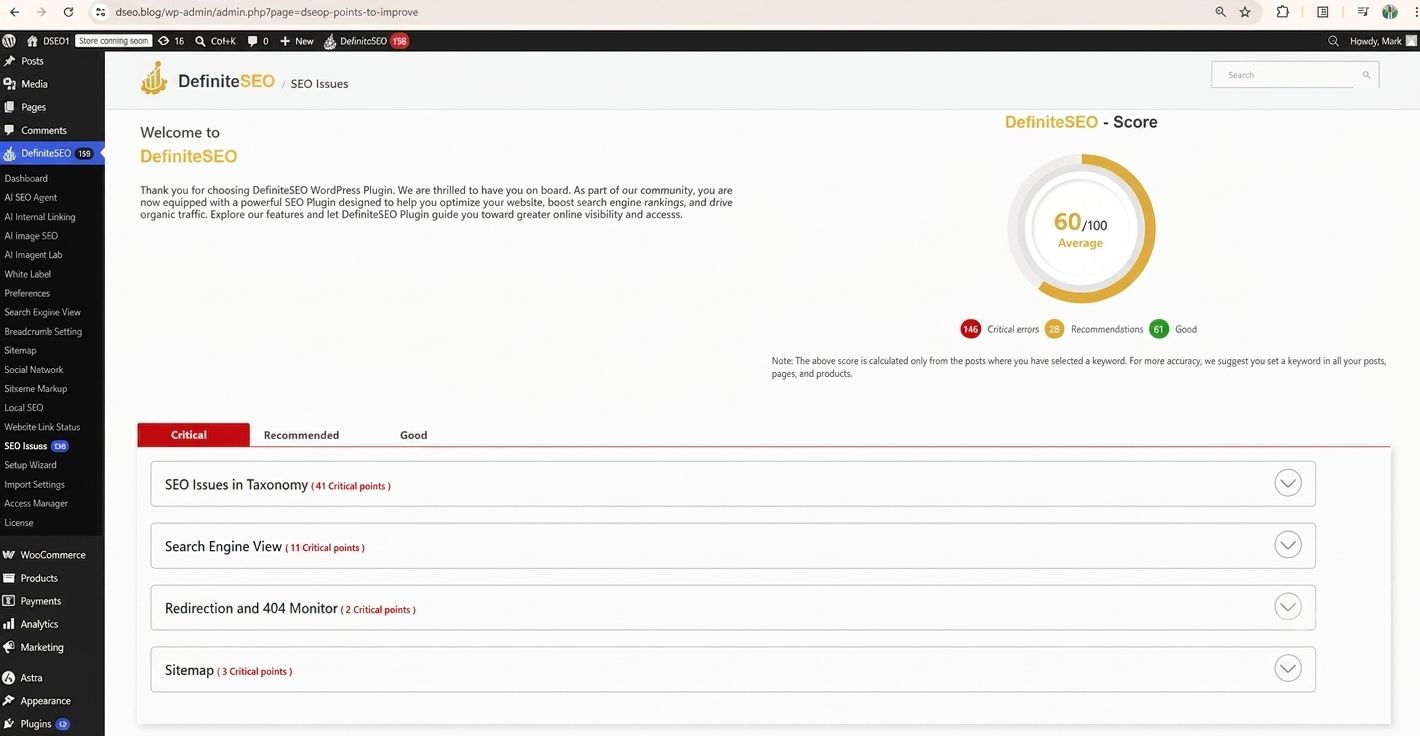
At the time of the audit, the website’s SEO score was only 55/100, indicating that there was significant room for improvement. A closer analysis showed that several important SEO elements were either missing or not properly configured.
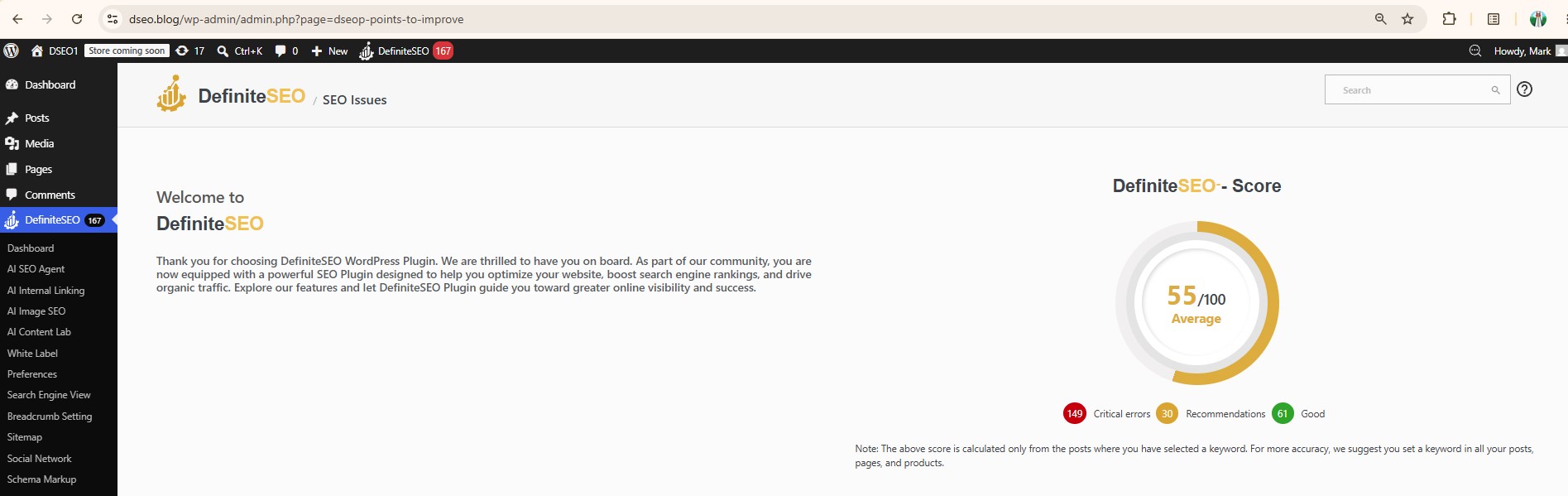
The key issues identified during the audit included:
- SEO settings for post types were not fully optimized.
- Taxonomy settings required optimization to improve how categories and tags were handled by search engine.
- Search engine visibility settings needed attention to ensure important content could be properly crawled and indexed.
- Multiple 404 errors were detected, affecting both user experience and website crawlability.
- Sitemap configuration issues were found, which could impact how search engines discover and index content.
- Social media settings were incomplete, affecting how pages appear when shared across platforms such as Facebook and X (Twitter).
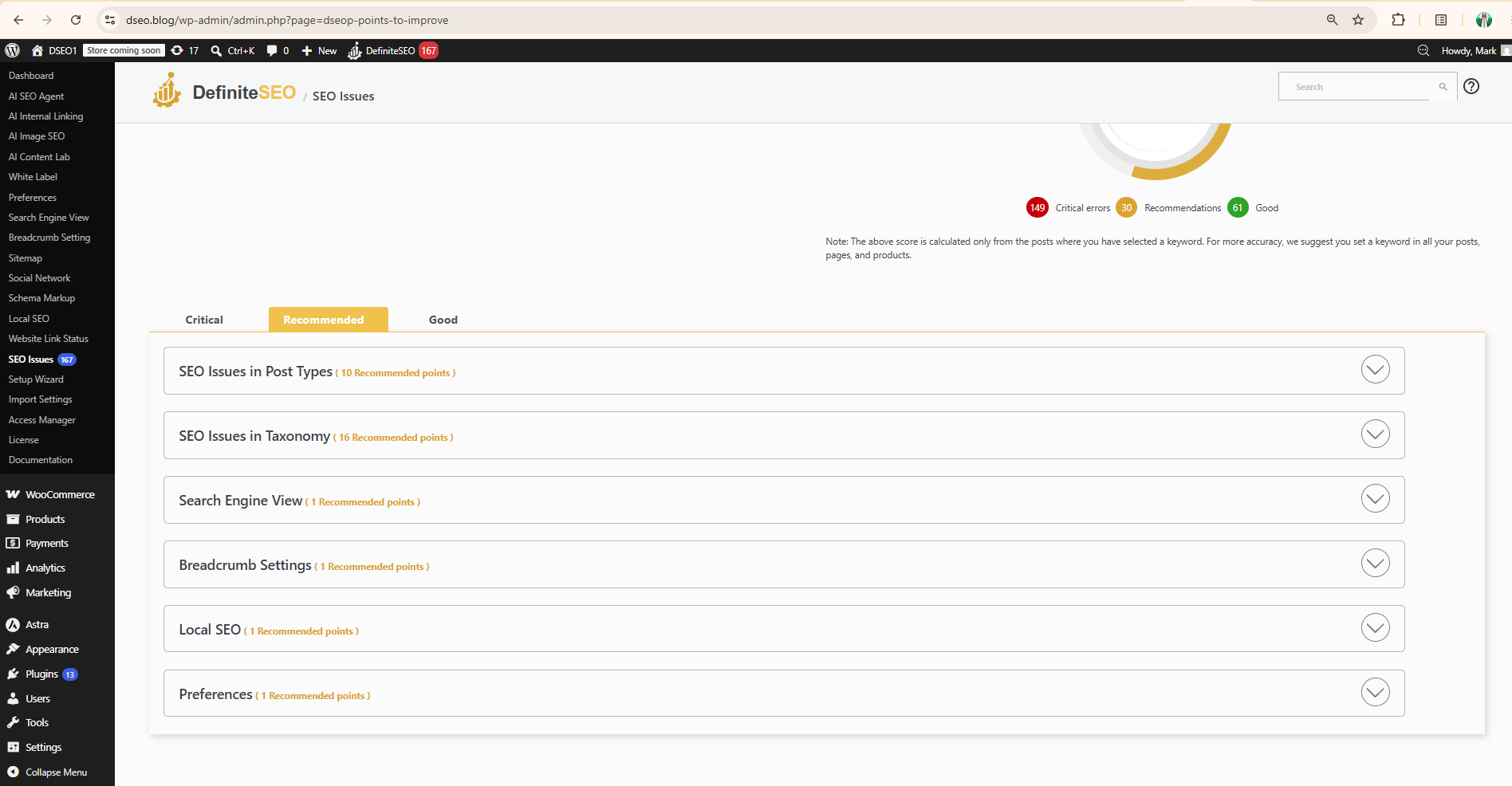
- Several additional on-page and technical SEO recommendations were identified that could further improve the website’s overall SEO health.
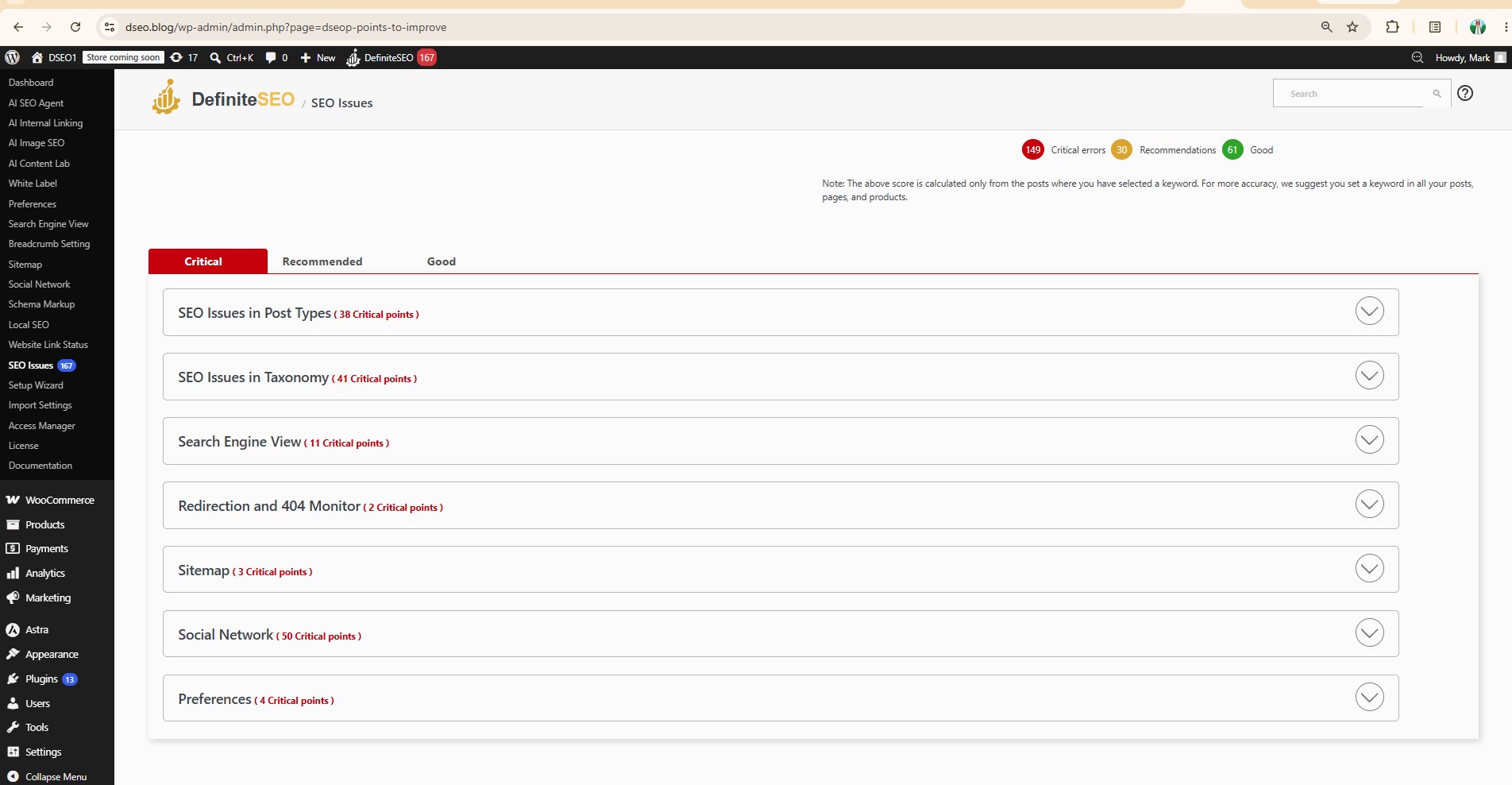
While none of these issues alone would severely impact the website, together they were preventing the site from achieving its full SEO potential. Addressing these challenges became the primary focus of the optimization process.
The Optimization Process
After completing the initial SEO audit, the next step was to address the identified issues and improve the website’s overall SEO health.
Using DefiniteSEO, I analyzed the audit recommendations and started implementing the required optimizations. The focus was not only on improving the website’s SEO score but also on strengthening its technical foundation, improving search engine understanding, and ensuring better website performance.
The optimization process involved resolving technical SEO issues, refining website settings, improving content visibility, and implementing recommended SEO practices. Each issue was reviewed carefully and optimized to create a more search-engine-friendly website structure.
With the help of DefiniteSEO’s features and AI-powered recommendations, the optimization process became more efficient by identifying improvement areas and guiding the necessary fixes.
Fixing Technical SEO Issues
The first step of the optimization process was addressing the technical SEO issues identified during the audit.
The website structure was reviewed and optimized by analyzing the post type and taxonomy settings. These settings play an important role in helping search engines understand how different sections of a website are organized. The required adjustments were made to ensure better content organization and improved search engine visibility.
The audit also identified multiple 404 errors that could negatively impact both user experience and search engine crawling. These broken links were reviewed and fixed to ensure visitors and search engines could access the website without encountering unnecessary errors.
By resolving these technical issues, the website gained a stronger SEO foundation and became easier for search engines to crawl and understand.
1. Optimizing Post Type Settings
One of the first areas I focused on was the website’s post type settings. During the audit, I found that several post types were not fully optimized for search engines, which could affect how content is crawled, indexed, and displayed in search results.
Using DefiniteSEO, I reviewed the SEO settings for different post types and made the necessary adjustments to improve their visibility. This included optimizing indexing preferences, reviewing SEO-related configurations, and ensuring that important content types were properly accessible to search engines.
Although post type settings often go unnoticed, they play a significant role in a website’s overall SEO strategy. Properly configured post types help search engines better understand the website structure and ensure that valuable content has the opportunity to appear in search results.
After optimizing these settings, the website had a stronger SEO foundation and improved control over how different content types were presented to search engines.
2. Resolving 404 Errors and Redirect Issues
During the audit, DefiniteSEO’s 404 Monitor identified 11 broken links across the website. These 404 errors could negatively impact both user experience and search engine crawling, as visitors and search engines may encounter pages that no longer exist.
In addition, the Redirection Monitor detected 2 redirected URLs that required review to ensure they were functioning correctly and directing users to the appropriate destination pages.
To address these issues, the broken links were analyzed and fixed, while the existing redirects were reviewed and optimized where necessary. Resolving these issues helped create a smoother navigation experience, improved website crawlability, and reduced the likelihood of users encountering dead-end pages.
By fixing the identified 404 errors and reviewing the redirects, the website became more accessible to both visitors and search engines, contributing to a stronger overall SEO foundation.
3. Search Engine Visibility Optimization
The audit revealed several issues related to search engine visibility and metadata configuration. Many important content types, including the homepage, posts, pages, products, and taxonomies, were using incomplete or poorly optimized title and description templates.
The homepage title and description required optimization to provide search engines with clearer information about the website. Similar issues were identified across posts, pages, and product content, where metadata templates were missing important variables and descriptive elements that help improve search visibility.
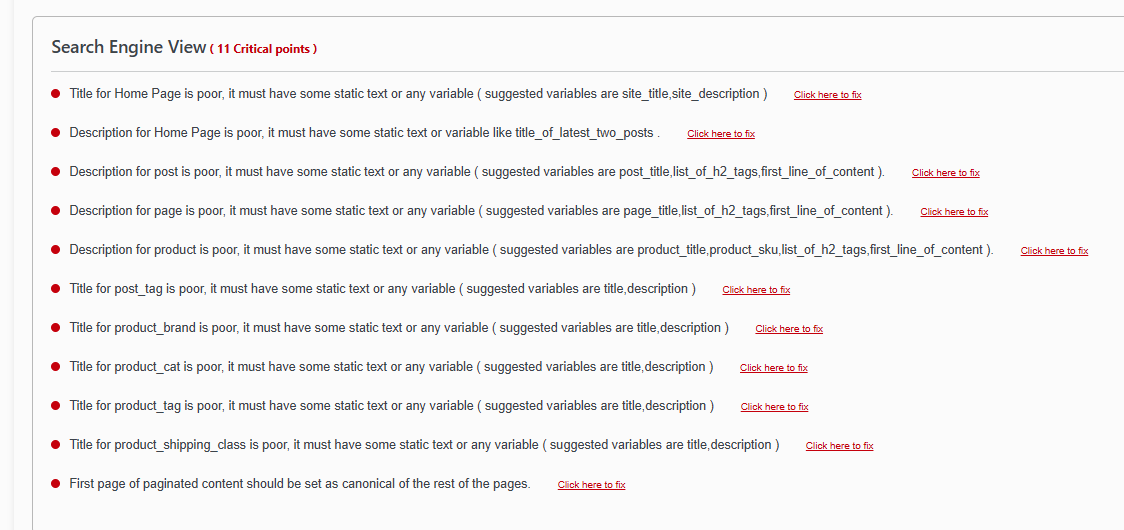
Several taxonomy pages, including product categories, product tags, product brands, and post tags, also required title optimization to ensure they could communicate their purpose more effectively to search engines.
Another issue identified during the audit was the canonical configuration for paginated content. The necessary adjustments were made to ensure search engines could better understand the relationship between paginated pages and avoid potential indexing issues.
By optimizing these settings, the website provided stronger SEO signals to search engines and improved its ability to present relevant information in search results.
4. Sitemap Optimization
The sitemap configuration was also reviewed as part of the optimization process. A properly configured sitemap helps search engines discover and index important content more efficiently.
During the audit, it was found that certain content types were excluded from the sitemap, including product tags, product shipping classes, and news sitemaps. As a result, search engines may not have been receiving complete information about all available content on the website.
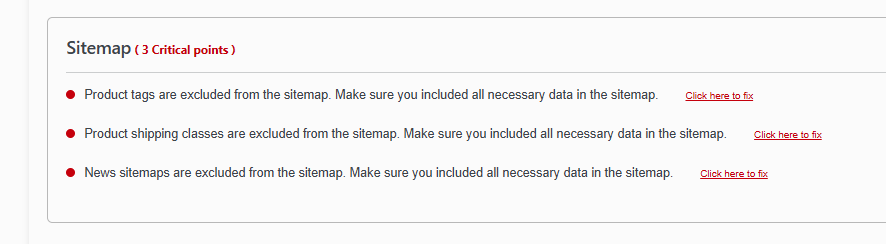
These sitemap settings were reviewed and updated to ensure that all relevant content types were included where appropriate. This helped improve content discoverability and provided search engines with a more comprehensive view of the website’s structure.
With the sitemap properly configured, the website became better equipped for efficient crawling and indexing.
Optimizing Social Media Settings
The audit identified 50 critical issue related to the website’s social media settings. Several content types were missing optimized Open Graph and Twitter Card metadata, social sharing images were not configured, and the website’s official social media profiles had not been added.
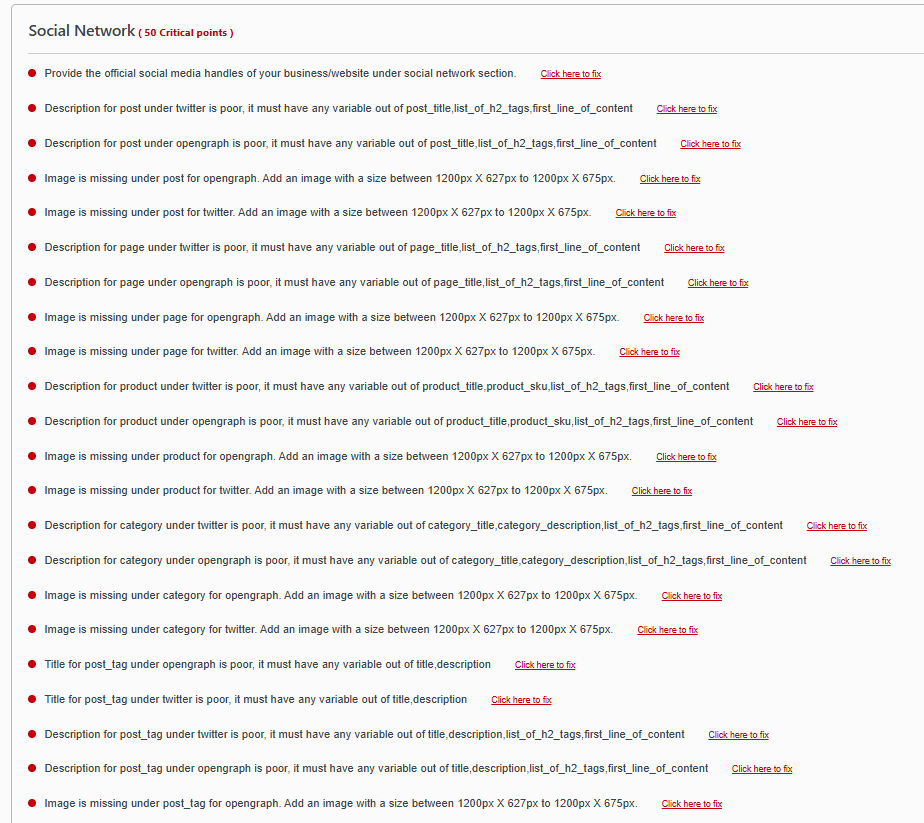
These issues were resolved by configuring the social network settings, optimizing social metadata templates, and adding the required Open Graph and Twitter images. As a result, the website became better optimized for content sharing across social media platforms.
5. Using DefiniteSEO AI SEO Agent
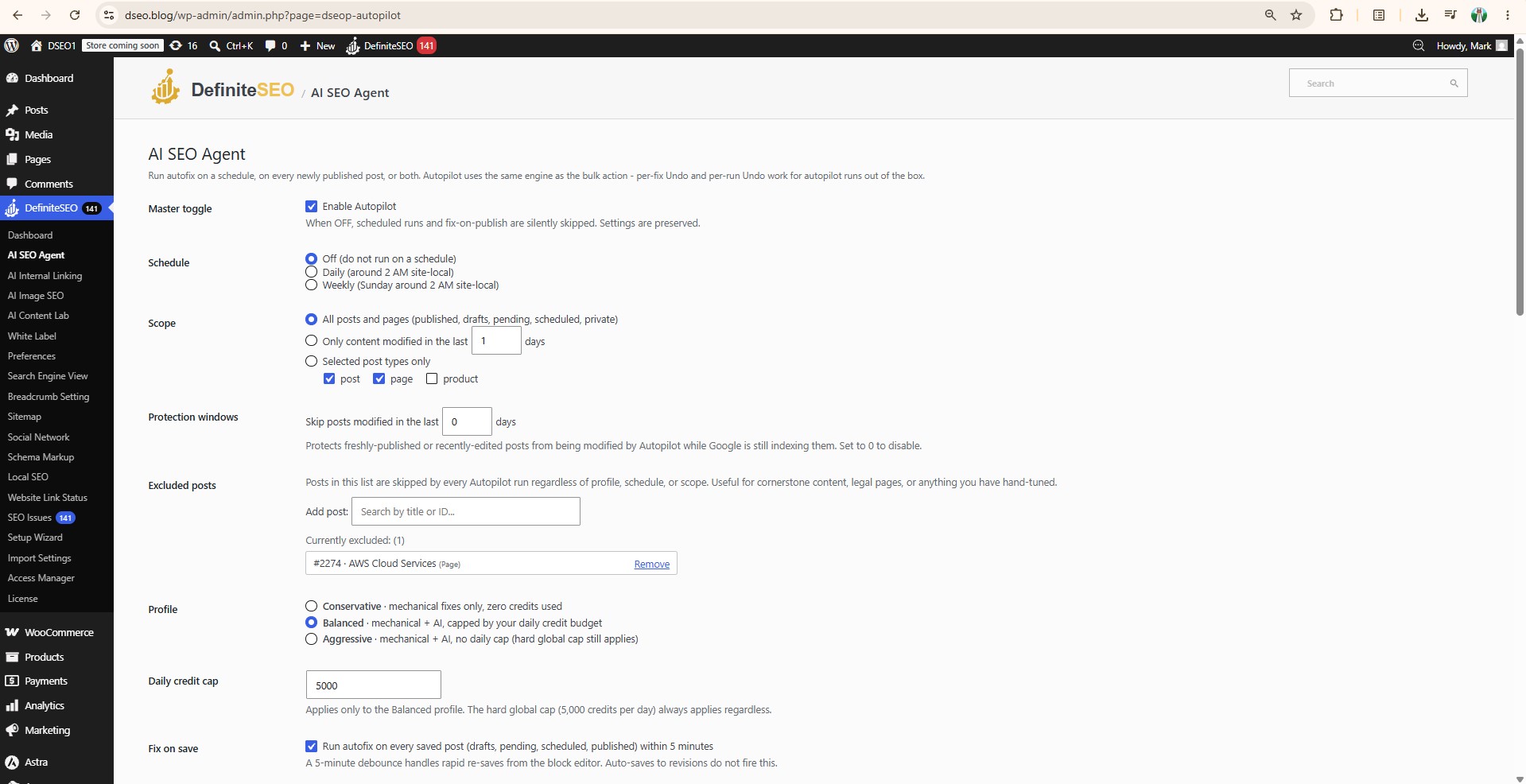
One of the biggest advantages during this optimization project was the use of DefiniteSEO’s AI SEO Agent. Instead of manually reviewing every recommendation one by one, the AI SEO Agent helped identify and resolve multiple SEO issues in a much shorter timeframe. This significantly reduced manual effort while ensuring that critical optimization opportunities were not overlooked.
Results After Optimization
After completing the optimization process, I ran another SEO audit using DefiniteSEO to compare the website’s performance before and after the improvements.
The results showed a significant improvement in the website’s overall SEO health. The SEO score increased from 55/100 to 90/100, indicating that most of the critical SEO issues had been successfully resolved.
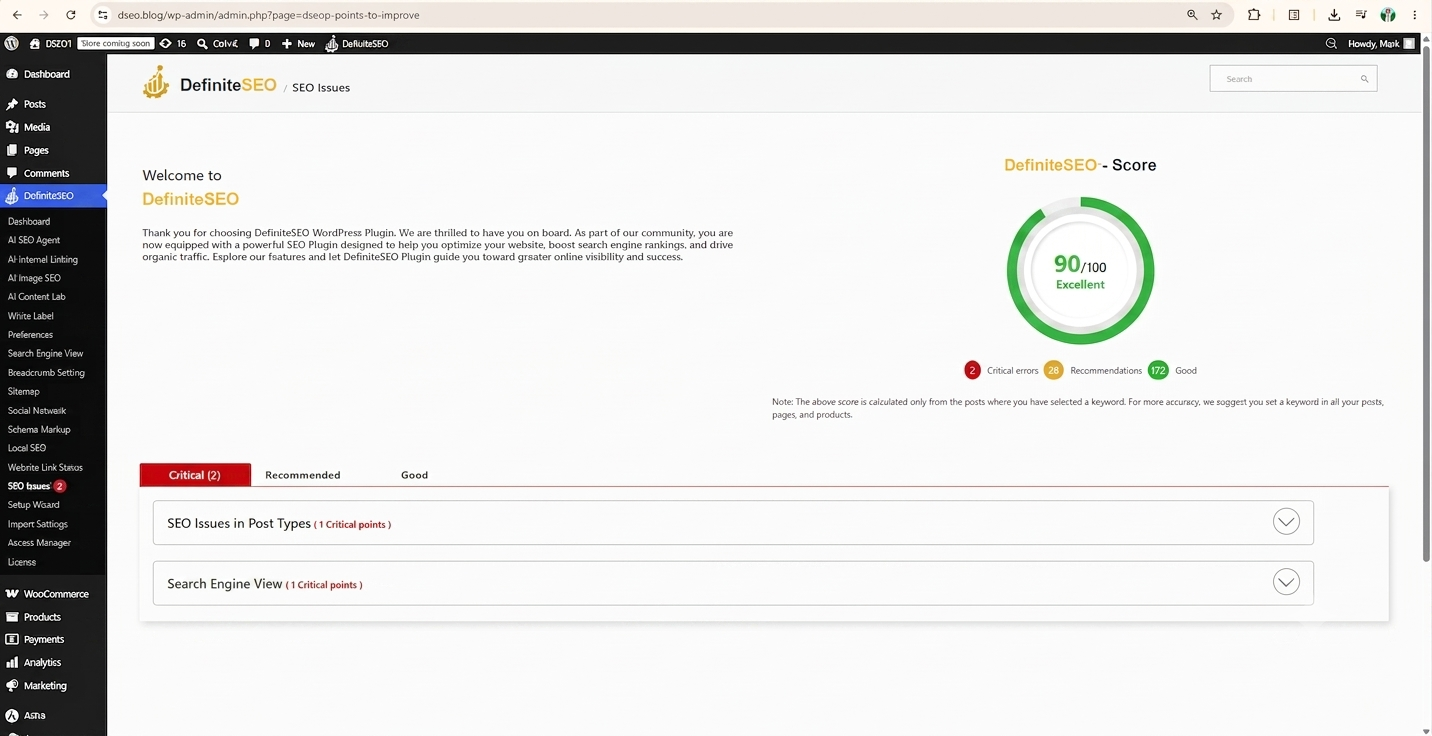
The improvements included:
- Optimized post type and taxonomy settings
- Fixed 11 detected 404 errors
- Reviewed and optimized redirect configurations
- Improved search engine visibility settings
- Enhanced title and meta description templates
- Optimized sitemap configuration
- Configured Open Graph and Twitter Card settings
- Added social media profile information
- Implemented additional technical SEO recommendations
As a result, the website now provides stronger signals to search engines, has improved crawlability, and offers a better foundation for future SEO growth.
Before vs After Comparison
| Metric | Before | After |
|---|---|---|
| SEO Score | 55/100 | 90/100 |
| 404 Errors | 11 | Fixed |
| Search Engine Visibility Issues | Multiple | Resolved |
| Sitemap Issues | 3 Critical | Fixed |
| Social Network Issues | 50 Critical | Fixed |
| Technical SEO Health | Needs Improvement | Strong |
This project demonstrated how addressing technical SEO issues can significantly improve a website’s overall SEO health. Many of the issues identified were configuration-related and could be resolved efficiently using DefiniteSEO’s audit recommendations and AI SEO Agent.
By combining technical SEO fixes, improved search visibility settings, sitemap optimization, and social metadata enhancements, the website achieved a much stronger SEO foundation and a substantial increase in its overall SEO score.
Conclusion
Since this project was conducted on a test website, the primary focus was on improving technical SEO health and resolving audit issues rather than measuring long-term traffic growth.
Through this optimization project, dseo.blog improved its SEO score from 55/100 to 90/100 by resolving critical technical issues and implementing SEO best practices using DefiniteSEO.
This case study highlights how regular SEO audits and timely optimizations can help identify hidden issues and create a stronger foundation for long-term search visibility and growth.
DefiniteSEO
Mark is a technology writer and digital marketing enthusiast with expertise in SEO, cloud computing, WordPress... See full bio
Mark is a technology writer and digital marketing enthusiast with expertise in SEO, cloud computing, WordPress development, web performance, and modern web technologies
Alumni of: Stanford UniversityEmployer Name: TechNova Solutions Pvt. Ltd.
Job Title: Senior Software Engineer
Knows About: Search Engine Optimization (SEO), Technical SEO, Local SEO